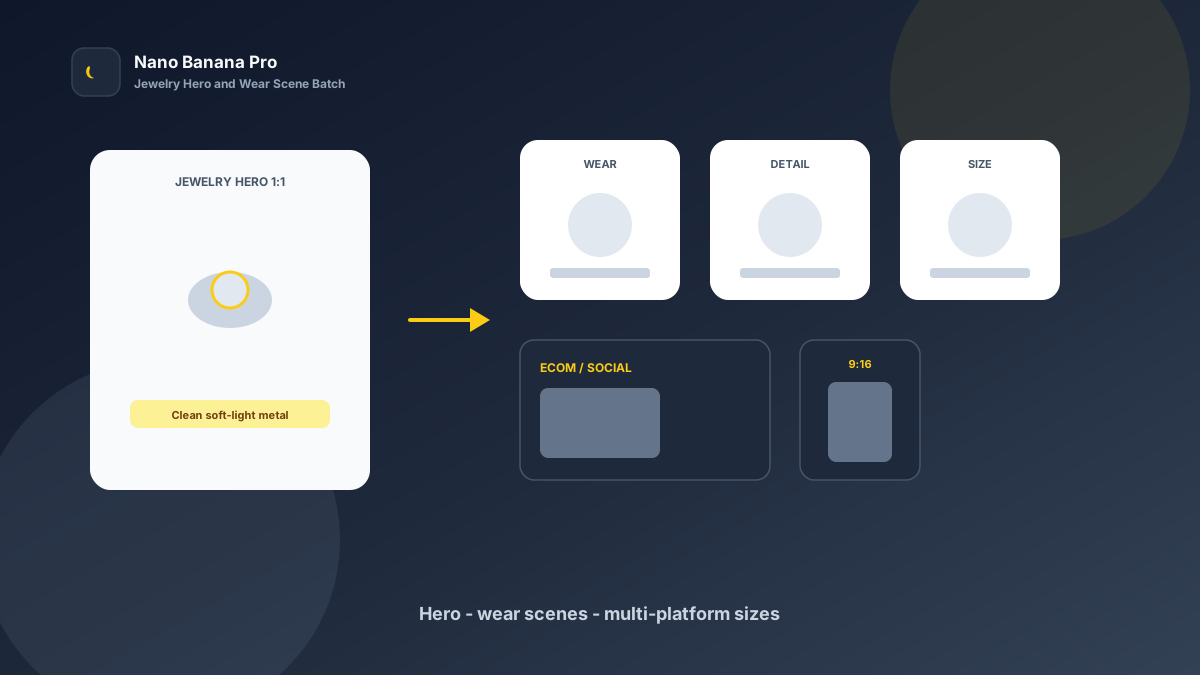
Nano Banana Pro Jewelry Hero & Wear Scene Batch Workflow
Jewelry launches fear one thing most: expensive goods with rough images. Hero glare is harsh, metal colors drift, and wear shots look like casual selfies. Shoppers swipe past in the list before they open carat and certificate copy. Nano Banana Pro with Nano Banana img2img turns “one set of tabletop product photos + three template prompts” into a replicable jewelry product hero and wear-scene batch workflow: lock the product hero look first, then batch-extend wear scenes and multi-platform sizes. This article covers the full SOP.
Why Jewelry Visuals Must Set the Hero Tone First, Then Layer Wear Scenes?
Many operators “reroll” every asset alone, so the tabletop hero feels cold, necklace wear shots go warm, and social posts use yet another filter. Shoppers suspect a patchwork store. The scientific approach is to lock one high-recognition product hero (Jewelry Hero) as the visual anchor, then copy the same lighting, metal color, and background logic across every wear-scene image.
Nano Banana Pro builds on the fast generation experience of Nano Banana and suits commercial jewelry cases that need controllable metal reflections, realistic gem fire, and undistorted structure. Split the flow into three steps—hero tone-setting → wear-scene extension → ecommerce/social/ad size pack—and you launch like an assembly line.
Workflow Overview: One Hero, Three Output Types
Follow strict order: after the product hero is signed off, all wear and channel images carry similar lighting and metal color so the shelf style does not split. The three prompt templates below can be copied into Nano Banana / Nano Banana Pro—replace [brackets] with your piece details.
| Stage | Output Type | Typical Use | Core Constraints |
|---|---|---|---|
| 1 | Product hero Jewelry Hero | List cover, first image | Real structure; clean reflections |
| 2 | Wear / detail scenes | Detail page, seeding long-form | Unified style; size readable |
| 3 | Multi-platform size pack | Ecommerce / social / ads | Compliant ratios; selling points not cropped |
Stage 1: Product Hero (List Click-Rate Anchor)
Use for: Tmall / DTC list first images, flagship hero slots, livestream overlay heroes.
Key steps
- Pick the most complete angle with the clearest gem and prong setting as the tabletop reference.
- Generate a 1:1 or platform-required hero: soft light to control reflections, declutter, keep real size proportions.
- Archive with a version name (e.g.
hero-ring-solitaire-v1.png) as the full-set style reference.
Based on the uploaded jewelry product photo, generate an ecommerce list hero: single piece [ring / necklace / earrings / bracelet], stable composition; forbid changing metal structure, prong setting, and gem facet proportions;

Background [clean light gray / deep velvet], soft light [studio softbox / ring soft light], control overexposed highlights and messy reflections;
Keep real metal luster and gem fire; avoid over-smoothed plastic look;
Quality suitable for jewelry ecommerce first images, tone consistent with Nano Banana jewelry visual standards: clean, elevated, clickable.
Pro tip: State clearly “forbid changing prong setting and facet proportions,” or AI may “enlarge” the gem and trigger complaints. In Nano Banana Pro, img2img from a real photo keeps structure far more stable than pure txt2img.
Stage 2: Wear-Scene Extension (Unified Detail-Page Trust)
After the hero sets the tone, batch by selling points: hand wear, neck wear, ear close-ups, size comparison, and material detail.
Based on the uploaded jewelry-hero lighting and metal color, generate a scene image for selling point [hand wear / neck wear / ear close-up]: keep [same soft light + same metal color temperature], wear [natural pose] clear and readable;

Requirements: belong to the same visual system as the hero; forbid a new filter on every image; light skin retouch without changing jewelry structure; do not invent carat or certificate claims;
Composition [1:1 / 3:4], suitable for **Nano Banana Pro** batch detail-page imaging.
Nano Banana multi-turn dialogue works well for micro-fixes: “softer highlights,” “cleaner metal,” “simpler background”—faster than rewriting the full prompt. Fix detail-image order to lift completion rate:
- Hero: list and detail first screen
- Wear scenes 1–3
- Material / facet close-ups
- Size / stack-wear reference
Stage 3: Multi-Platform Size Pack (Ecommerce, Social, Ads at Once)
After product art is locked, extend channel specs—avoid re-cropping per platform and cutting off prongs or gems. Prepare at least these per SKU:
- 1:1 / 3:4: ecommerce list and detail
- 4:5 / 1:1: social seeding and Moments-style posts
- 9:16: short-video covers and vertical feed
Based on the uploaded jewelry hero, adapt to [target ratio: 1:1 / 3:4 / 4:5 / 9:16] jewelry placement size;

Strictly preserve jewelry recognition points, metal color, and clean tone; only adjust crop and whitespace by ratio;
[9:16 only] keep main stone and selling-point copy clear of the bottom 18% subtitle/button zone;
[1:1 only] keep the full piece in frame; avoid cropping into a partial close-up;
Output ready for ecommerce and social, style consistent with Nano Banana jewelry standards.
Brand Consistency: Many SKUs Must Not Look Like Different Studios Shot Them
The most common batch-jewelry failure is a new color temperature on every SKU. When building brand / boutique libraries in Nano Banana Pro, lock these habits:
- Same lighting line: e.g. all “studio softbox + light gray background”
- Same metal white balance: lock separate color-temperature lines for gold / silver / rose gold
- Fixed suffix line: “Consistent with Nano Banana jewelry visual standards: real structure, clean reflections, no over-beautification”
For “carat comparison” or “certificate display,” stay aligned with the physical piece and avoid unverifiable quality promises.
Batch Checklist (Countdown to the Launch Window)
Count backward from the launch window:
| Day | Task | Tool |
|---|---|---|
| D-4 | Outline SKUs, metal colors, main stones, and selling-point copy | Sheet |
| D-3 | Tabletop product photos (multi-angle, control reflections) | Phone / camera |
| D-3 | Generate product hero (Template 1) and lock the look | Nano Banana Pro |
| D-2 | Batch wear / detail scenes (Template 2) | Nano Banana Pro |
| D-1 | Extend ecommerce / social / ad sizes (Template 3) | Nano Banana |
| D-0 | Upload to store and sync social seeding posts | Ops |
Efficiency reference: Once fluent, one SKU’s hero plus 4–6 wear/detail drafts can finish within two hours. Teams using Nano Banana Pro shared templates also reduce shelf fracture from retouchers applying their own filters.
Case Study: Indie Jewelry Brand Launched a Ring Season in 72 Hours
An indie jewelry brand needed six rings live before the weekend; outsourced photography was fully booked, and old heroes glared harshly in mobile lists.
- Input: 6–10 tabletop photos per piece, brand primary color, metal and main-stone descriptions
- Step 1: Stage 1 template made 1:1 heroes—soft light controlled reflections and preserved prong structure
- Step 2: Batch-generated hand-wear and facet close-ups in the same style
- Step 3: Extended 3:4 detail images and 9:16 short-video covers
- Output: Upload-ready asset pack, entire pipeline in Nano Banana
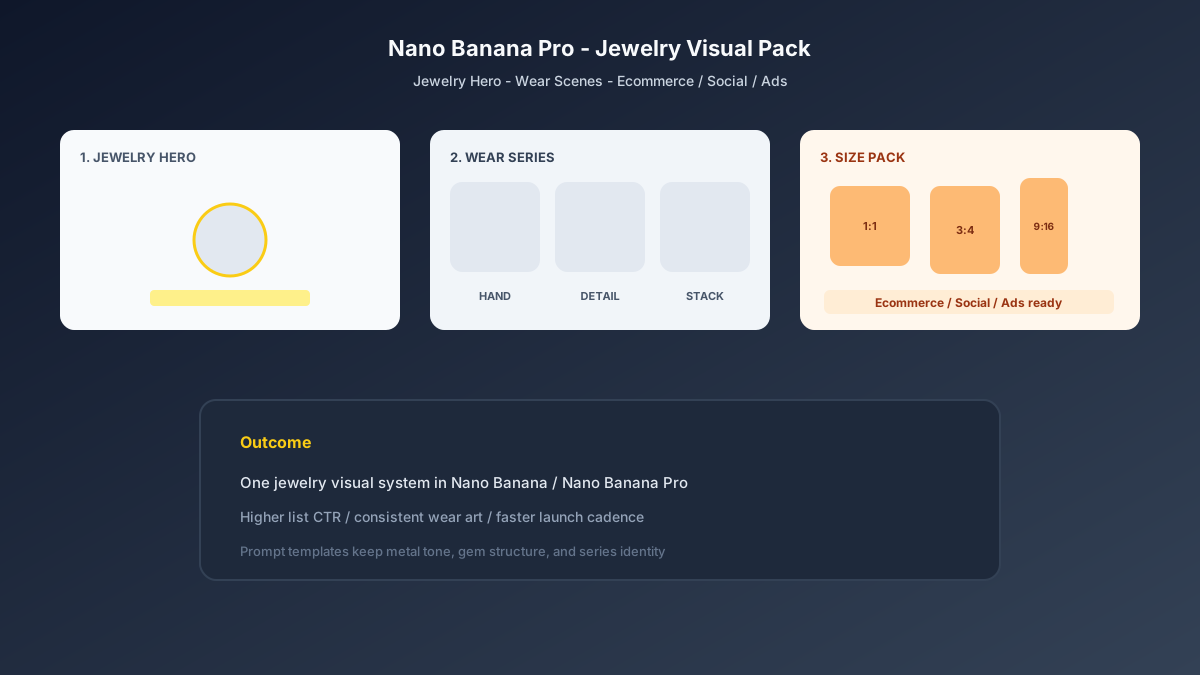
Ops feedback: list CTR rose clearly versus old art; detail dwell time grew; production cost was far below rush external shoots. Structured prompts + stable Nano Banana Pro series imaging let the team spend time on assortment and seeding content.
Conclusion: Leave Trust to Materials, Leave Series Identity to the Workflow
Jewelry competition is about first-image clicks and quality expectations. When product art shifts from “ad-hoc retouching” to “hero + template extension,” launch cadence steadies. Nano Banana Pro and Nano Banana fit as the execution engine for this jewelry SOP—not faking carats, but helping real structure and luster be seen more clearly.
After your next intake, lock the hero first, then open the three templates—you will find jewelry batch imaging in Nano Banana as clear and controllable as a launch schedule.
FAQ
Q: Will gems look too large and trigger complaints?
A: Always keep the live photo as reference and state “do not change prong setting or facet proportions.” Archive marketing art with original photos; Nano Banana Pro img2img stays closer to the real piece than pure txt2img.
Q: Metal colors keep drifting—what then?
A: Always upload the hero as reference and write “same metal color temperature.” Separate templates for gold / silver / rose gold; spot-check first, then batch.
Q: How should Nano Banana and Nano Banana Pro divide work?
A: Nano Banana Pro for hero sign-off and high-demand series consistency; Nano Banana for size extension and micro-fixes. Templates are shared—pick the entry by account access.